Reva · AI astrologer, built in house · 2026
How we designed Reva, an AI astrologer, for retention
Horoscopes are free everywhere. We had to design a reason to open Reva again tomorrow, and then check whether people trusted it.
The problem
A horoscope is read once.
We needed people to come back.
- Astrology in India is mostly free: AstroSage, Kundli apps, dozens of WhatsApp groups.
- The brief was a paid astrology app that people open every day.
- A horoscope is a one-time read. You finish it and you leave.
- Personalising the horoscope and charging for it was the obvious answer. We did not think it was enough to bring someone back the next day.
- We worked with AI tools from the first day, including for the product strategy pitch.
The bet
A conversation first.
The horoscope second.
Our bet was that people return to something that seems to know them more readily than they return to content. So Reva is a chat with an astrologer first. The daily horoscope is the nudge that opens the app, not the whole product. Memory across chats is the part of this bet we are still building and testing.
Around the chat we keep adding features built for return visits: daily predictions, devotional music, chanting mantras, daily rituals, affirmations and palm reading. Each one gives a different kind of person a reason to open Reva tomorrow.
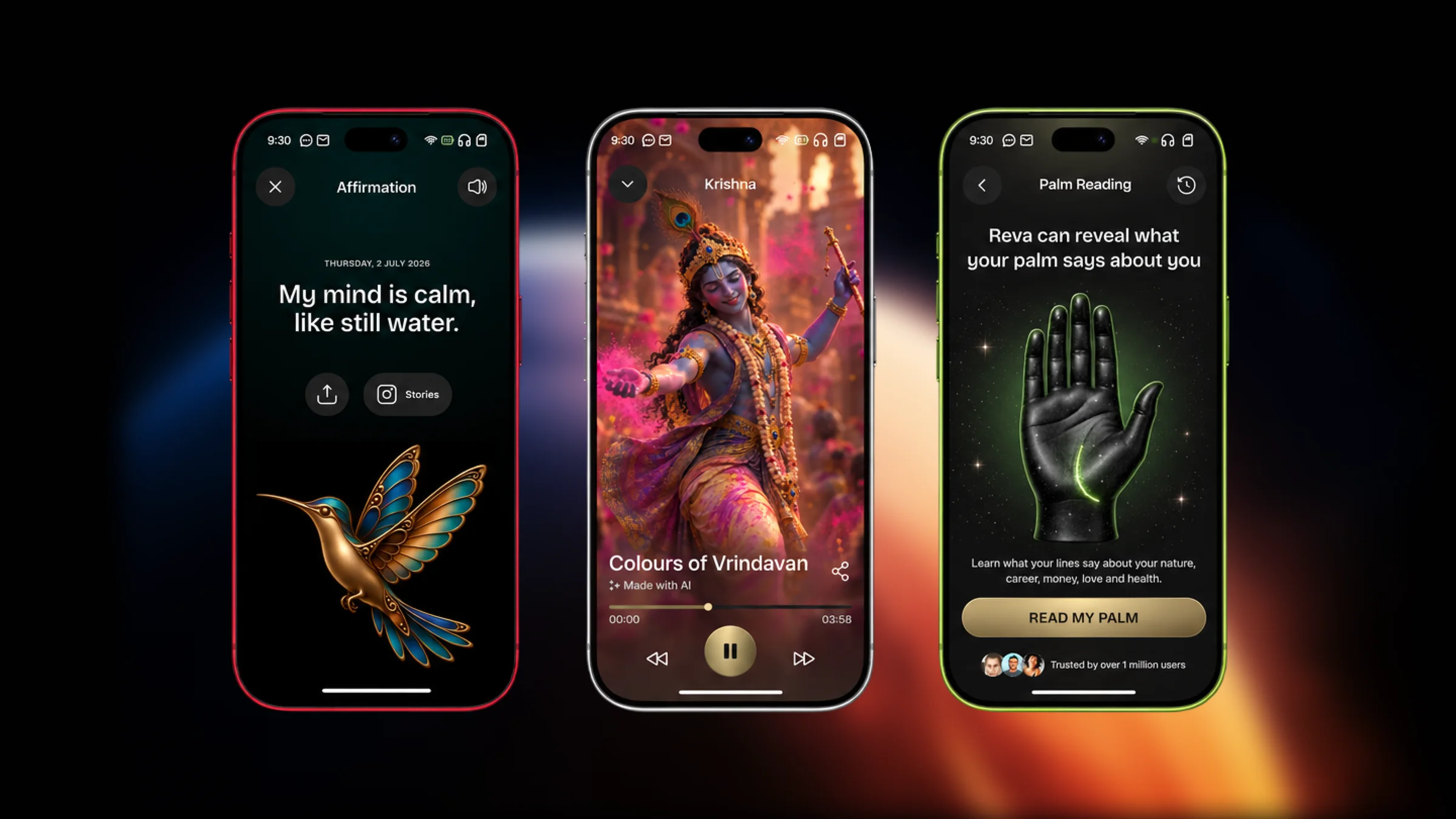
Three reasons to come back: a daily affirmation, devotional music and palm reading.
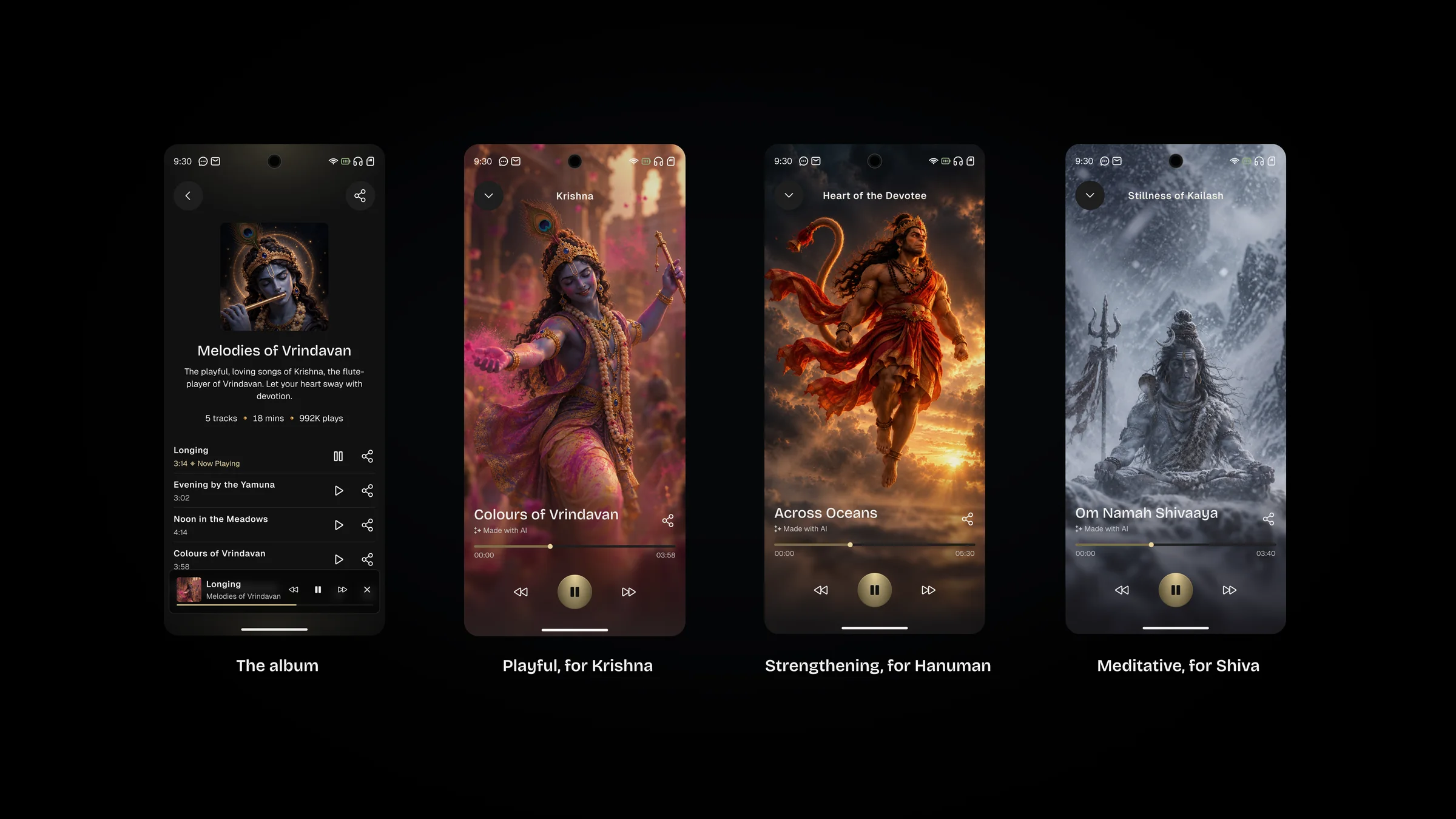
Devotional music: playful for Krishna, strengthening for Hanuman, meditative for Shiva.
The question behind every screen: why would you open this again tomorrow?
The design
Onboarding without a form.
An astrology app needs a lot from you before it can say anything personal: name, birth date, birth time, birth place. Each of those asks is a step where people drop off. I proposed asking all of it inside the chat, so giving your details feels like talking to an astrologer and not like filling a form.
- Every onboarding question (birth date, birth time, name) happens inside the chat. No forms, no dropdowns.
- When users don't know their exact birth time, Reva adapts rather than blocking them.
- The paywall comes after the first real exchange, so you have seen what Reva does before you are asked to pay.
 RevaYour AI Astrologer⋮
A recreation of the onboarding chat.
The craft
One set of objects, from the chart to the store page.
Reva is dark with gold. The Kundali opens with your own sign as a gold 3D object. We made the signs, the planets and the small objects around them as one set, so the chart, the daily prediction and the store page read as the same product.


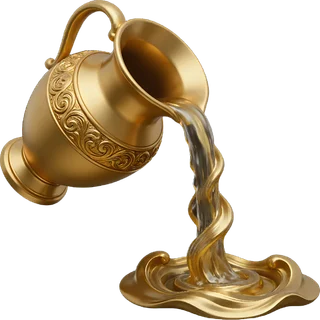


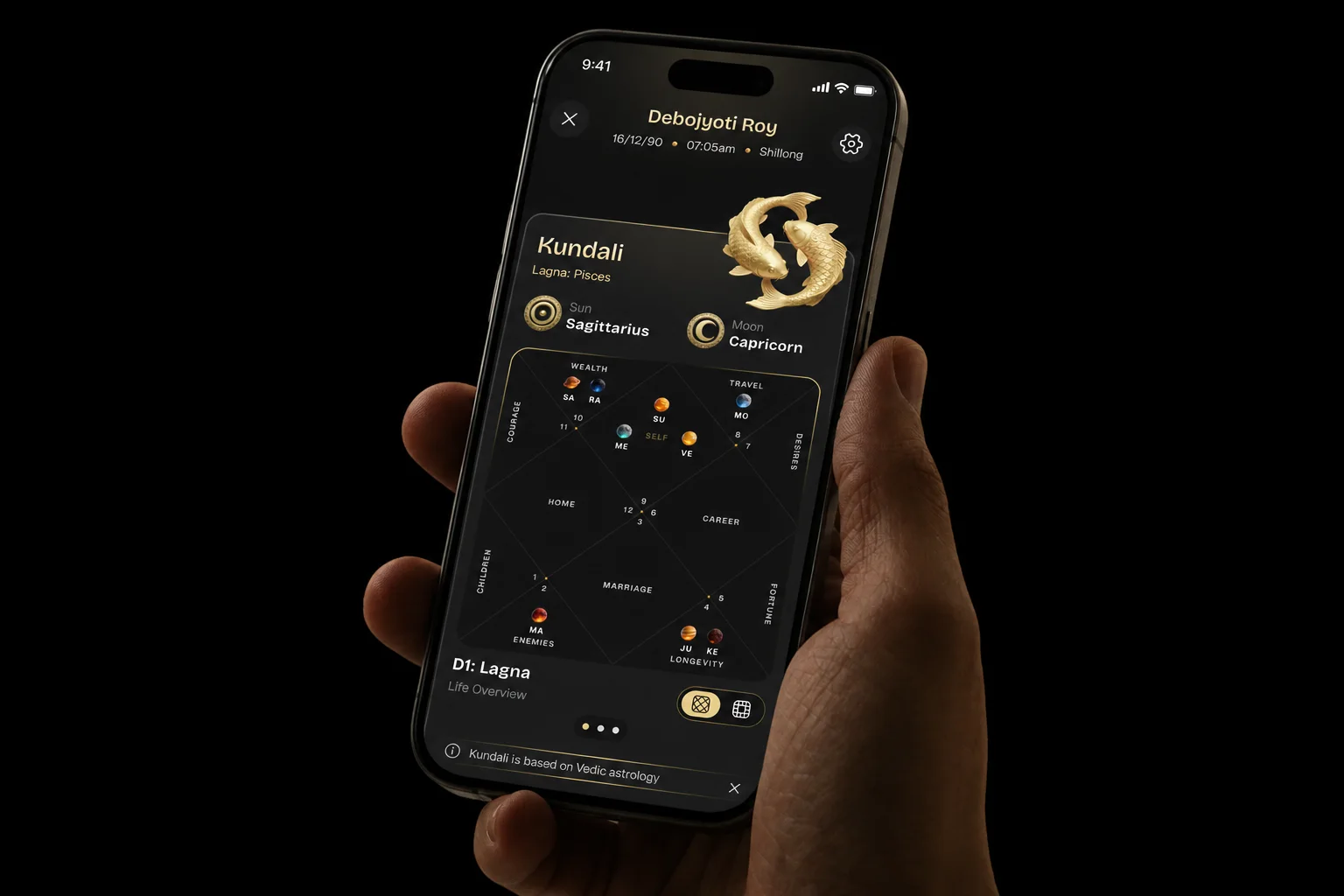
The Kundali, with the person's sign at the top of the chart.
Where Reva is today
High engagement does not mean high trust.
The research
We were measuring return visits, not trust.
The retention chart looked healthy. The daily prediction had a strong habit around it: most people open it at a fixed moment, early morning before the day starts, or right at midnight when the next day's prediction unlocks. On the chart they all look the same, a user who came back. So we picked up the phone and interviewed them.
- One man opens Reva every morning. He rated his trust in it one out of ten. The predictions don't match his life, so he reads it and closes it.
- One woman rated her trust close to ten. She said she can tell Reva things she can't say out loud at home. On the chart, she and the first man are the same row.
- A third user trusted the predictions and deleted the app anyway. She wanted to know what was coming next year, not just today. Trust didn't keep her either.
What we learned
What made predictions feel personal.
The calls told us what moves trust. It goes up when a prediction feels written for one person, from their full birth chart, not their star sign. It goes down when the lucky colour is the same for everyone. It goes down when someone never knew their real birth date, entered a rough one, and then read the mismatch as the app being wrong.
The craft finding surprised us. Not one person complained about how Reva looks, and several said the look is why they picked Reva over other astrology apps. That's worth knowing, and it's also a warning. Craft is why they chose it. It isn't why they stay.
The general lesson goes past Reva. Retention is measured every day. Trust was measured once, by phone. A dashboard counts the one-out-of-ten user and the ten-out-of-ten user as the same win, and one of them is churn that hasn't happened yet. No dashboard we had could tell them apart. A ten-minute phone call could.
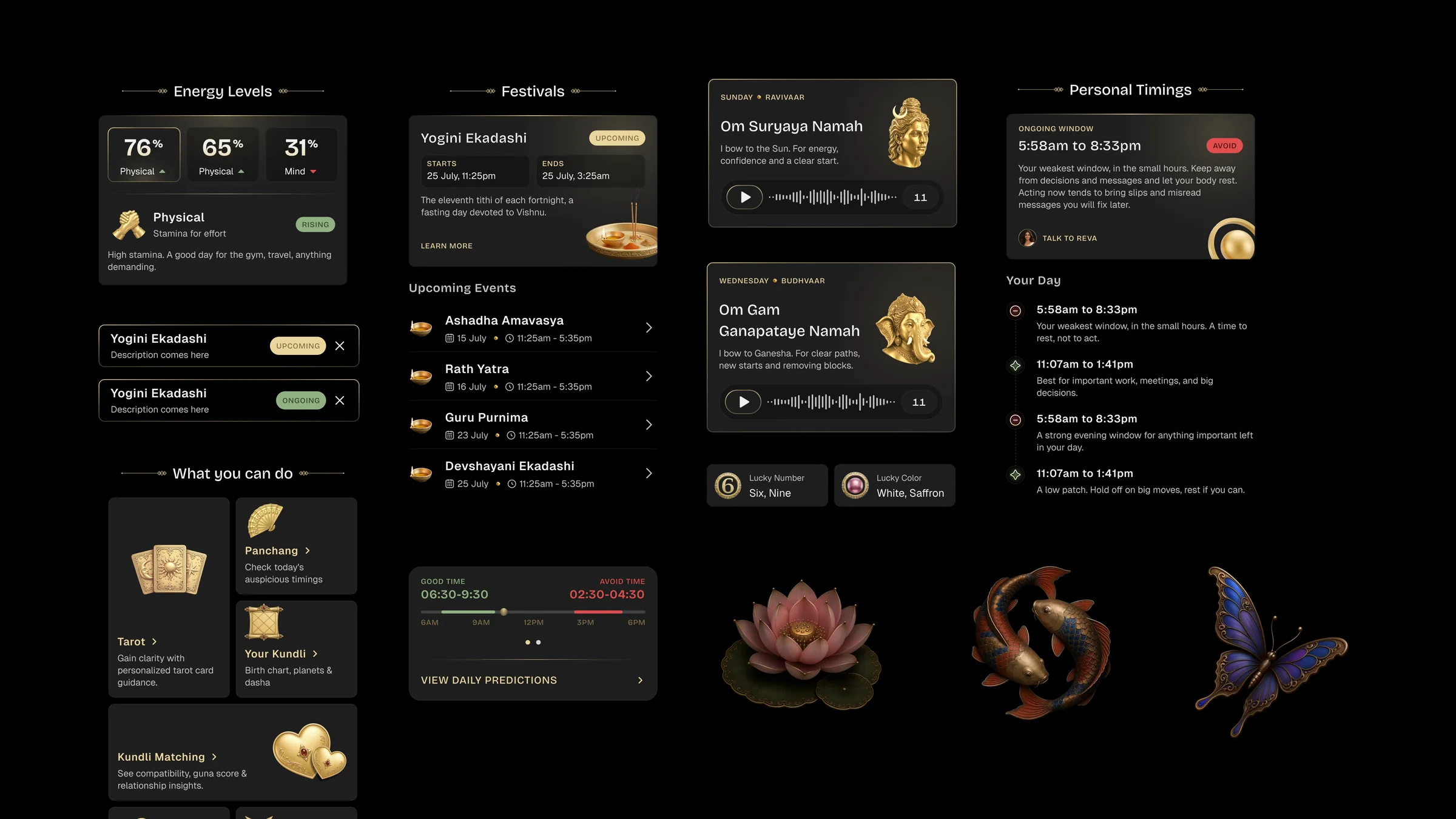
The daily prediction users were rating: energy levels, personal timings, lucky number and lucky colour.
My role, and what's next
What I did, and what comes next.
I led design strategy and direction. I pushed for a conversation-first product before any screen existed, and that shaped the onboarding, where the paywall sits and how the product asks for data. The numbers on this page belong to the whole team; design was one part of them. Onboarding is one retention loop, not the whole story. Chat memory is the bet that could become the core one, and the research above is how we are testing it instead of assuming it.
The research also set the next brief. It is not a feature. It is a question inside the app, right after the prediction: was this accurate? Asked every day, it gives us a trust number to read next to retention.
Enjoyed the read?